[ad_1]
Japanese brands have long been at the top of Thailand’s auto market. The Southeast Asian country is the region’s largest car producer and exporter, helping give it the moniker of the “Detroit of Asia.” And not only do carmakers like Toyota and Honda manufacture in Thailand, they dominate vehicle sales there too.
But now Chinese EV makers, amid a massive global expansion, are making inroads into Thailand’s car market. It’s the latest country where China’s cheap electric cars are challenging established automakers, many of which were slow to embrace the EV transition.
BYD, Hozon Auto and Great Wall Motor now collectively have 7.4% market share in Thailand, according to data released Thursday by Toyota Motor’s Thai subsidiary.
China rising
China has yet to break the top five brands, but it’s getting close. BYD sold 30,432 cars in Thailand last year, just 2,000 cars shy of fifth-place Mitsubishi. The Berkshire Hathaway-backed EV giant is still far behind #1 carmaker Toyota, which sold 265,949 cars in Thailand. (Isuzu, Honda, and U.S. carmaker Ford take second, third and fourth place respectively.)
Yet when it comes to EVs, BYD is leading the pack. Thailand registered 76,314 EVs in 2023, almost seven times more than the previous year, according to data from Autolife Thailand. BYD accounted for some 40% of that, while Neta, an EV brand from Hozon, and the now-Chinese-owned MG Motors take second and third place respectively.
Chinese-owned brands make up close to 80% of Thailand’s EV market, compared to less than 1% for Japanese brands.
Increasing EV demand
EV sales in Thailand could double this year, Krisda Utamote, president of the Electric Vehicle Association of Thailand, predicted in an interview with Bloomberg. He forecast that EV registrations could surpass 150,000, meaning that 20% of all registrations would be for electric cars.
Government subsidies have contributed to this EV demand. The latest scheme, which starts this year, offers subsidies of up to 100,000 Thai baht ($2,836) per car and will run through 2027. The new package is less generous than previous offerings, which ran up to 150,000 Thai baht ($4,255) per car.
China’s EV brands are also entering Thailand’s auto manufacturing sector.
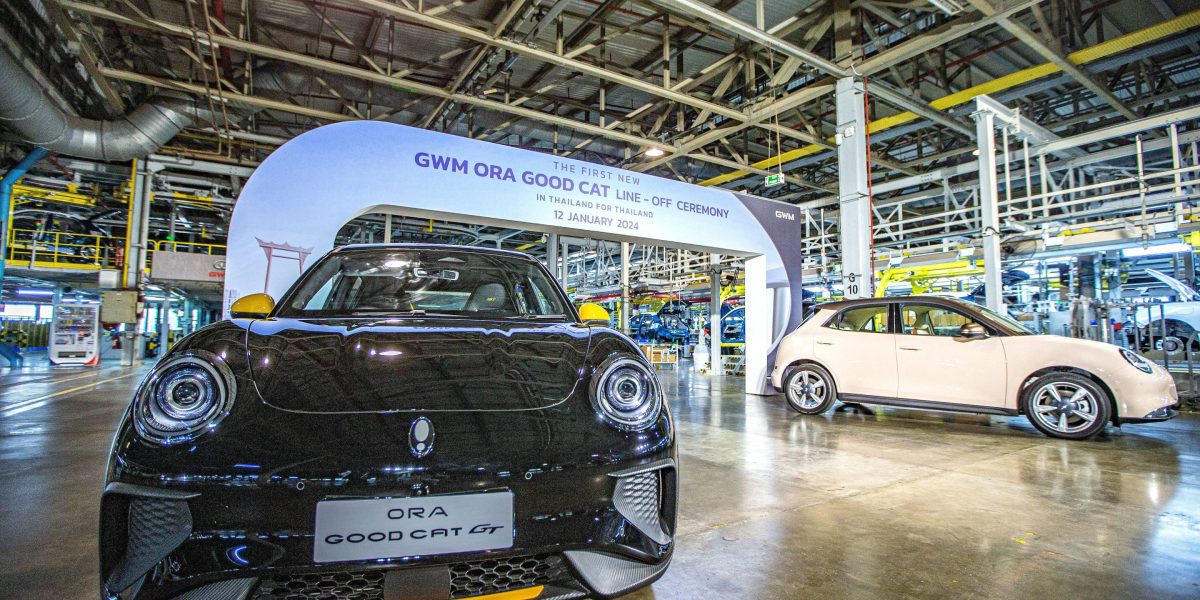
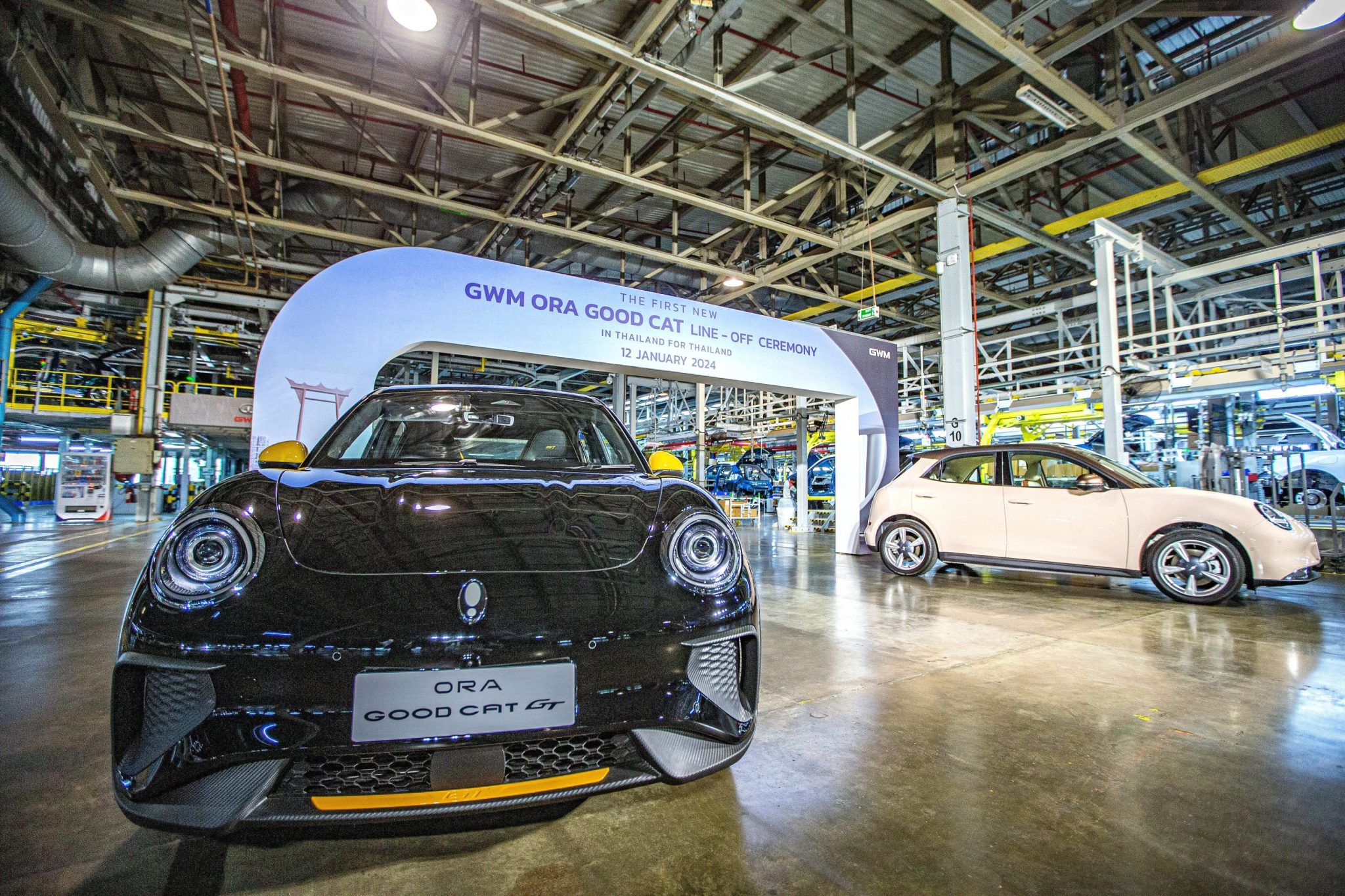
In January, GWM claimed to be the first Chinese automaker to start making electric vehicles in Thailand. The company hopes to start making batteries locally in March.
BYD broke ground on its first Thai auto plant last March. The company hopes to start operations this year, and projects an annual production capacity of 150,000 vehicles.
[ad_2]
Source link


