[ad_1]
For budget Airline Ryanair, the marketing modus operandi has always been rooted in provocative PR. And if you’re one of the millions of people who have seen its hot takes on social media, it will come as no surprise an evolution of this strategy is helping it thrive online.
From press ads announcing rival EasyJet’s hire of former corrupt Zimbabwean dictator Robert Mugabe as “head of punctuality” to trolling newspapers with reports it was set to introduce “standing” seats on its infamously cramped planes, the brand has never been afraid to court controversy. All of this is spearheaded by unapologetic boss and founder Michael O’Leary.
More recently, this irreverent tone of voice has extended to its social presence where it relies on quick-witted humor and pop culture references to cultivate community and, of course, fame.
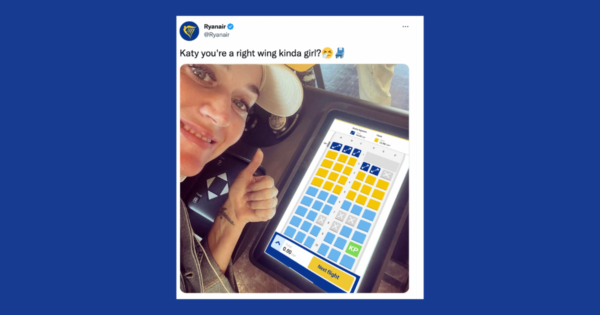
Think memes about Nick Cannon’s ever-expanding family, calling Ryan Reynolds “Daddy,” roasting customers who complain about minor issues and banning talk show host James Corden from the airline after reports he was rude to staff in a New York restaurant. See also trolling Twitter CEO Elon musk and seating Katy Perry on the right side of the plane after she revealed her vote for the Republicans in the U.S. midterm elections.
Ryanair’s bold approach to social media has seen it amass 1.9 million followers on TikTok and almost 700,000 on Twitter who engage with its hot takes on culture and funny videos. But it’s about much more than reach and making people laugh—it’s part of a deeper strategy.
A lot of people think we’re just a bunch of 12 year olds shit-posting on the internet … but there’s method behind the madness.
Michael Corcoran, head of social media, Ryanair
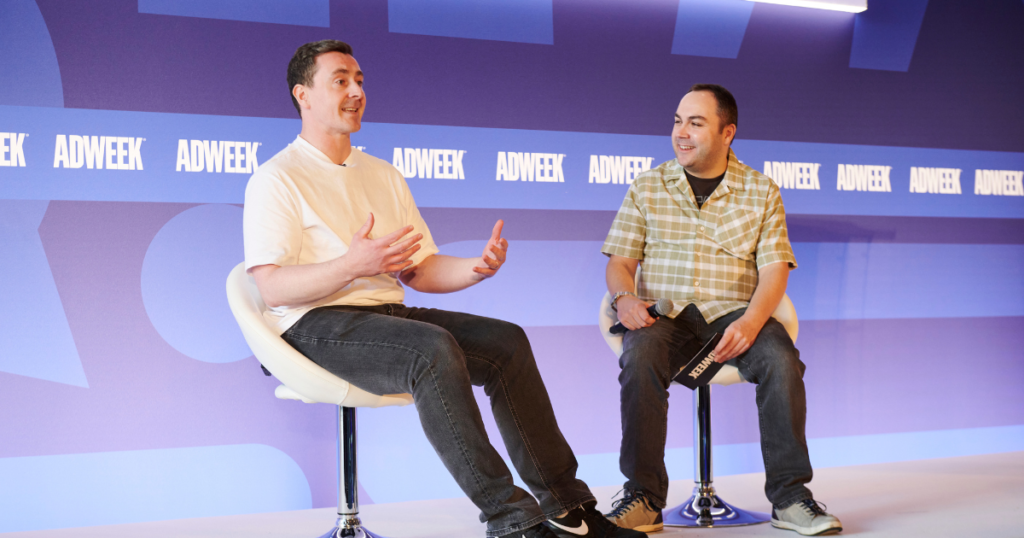
The pilot of this creative chaos is Ryanair’s head of social media Michael Corcoran. Speaking at Social Media Week Europe, he claimed there was a robust strategy behind the company’s “brazen” approach to social media channels.
“A lot of people think we’re just a bunch of 12 year olds shit-posting on the internet, or the school bully who gives everyone a nipple cripple every now and then. But there’s method behind the madness,” he said, arguing people use social media to be entertained and “get away from the shit show that’s going on in the world.” Not to see polished advertising campaigns.
“If you’re posting boring shit that’s not entertainment and driving culture and connecting with people, you’re not getting good value out of the platforms,” Corcoran added.
He said the rise of the creator economy driven by Gen Z on platforms like TikTok was also coloring Ryanair’s blueprint. “Gen Z doesn’t want perfect content, they want [brands] to be more real and human, so that’s influenced a lot of what we’ve done.”
The most talked about brand on social
Ryanair has separated its social functions to deal with this. All real customer enquiries and complaints (which, naturally, most airlines are inundated with in the challenging travel environment) are directed to a separate AskRyanair account.
For Corcoran, the airline’s social communications strategy is building on its disruptive DNA, which has seen it heavily invest in “cost-effective” PR to stay top of mind for customers flying across Europe. He said the brand’s vision is to be the “most talked about brand” on social media because this approach offers a high-reach, low-cost solution that will keep the brand in traveler’s considerations.
He also sees platforms like Twitter and TikTok as a place to cultivate community and CRM, solving business problems in the process and helping people understand Ryanair’s place in the market versus it’s premium competitors and ensuring they’re “less pissed off” with the airline in the process.
Indeed, Ryanair’s brand image is often conflated with low levels of customer satisfaction compared to competitors. However, in recent years the buzz around it has become less negative, with research firm YouGov finding it has managed to grow in value, reputation and impression among British consumers.
“That expectation is too high, and we have a job to shift the perception of our brand in this context,” he said. He observed how a lot of negative comments about Ryanair play out online, whether it’s about seating arrangements or additional luggage costs, giving his team an opportunity to poke some fun at “first world problems” and increase engagement in the process.
Taking flight
Following a reshuffle eight months ago, Ryanair’s social media team was split into two divisions: community and reactive. The former is an “always on squad” charged with changing brand reputation. The latter seeks out opportunities to “newsjack” and jump on trends.
“The two of them working together allow us to cut through on social and shift perceptions,” said Corcoran. Most messaging is not paid, either. The brand reached 200 million people in October without spending a dime on social, relying on its viral content to get picked up by meme accounts and in the press.
Though Ryanair’s roasts are enjoyed by fans, even been described as “savage,” its social media boss said there are topics it simply will not wade in to. Airline safety is a big one, as are religion, identity and race. When it comes to issues of the day, though, it is not afraid to kickstart irreverent conversations by saying “what everyone else is thinking.”
He admits that the airliner is still working out how to tangibly unearth how TikTok, Instagram and Twitter are shifting the dial on how consumers view the brand. Beyond the comments section under its posts, it sends out a monthly brand survey to 30,000 passengers. For now the role social media is playing is drawing a mixed reception among customers, but it wants to convert those engaging passively to encourage them to share more.
“If we can get to a place where half the people we survey believe social is promoting the brand then we’re doing a really good job,” he added.
In the last 12 months, sentiment in comments has improved, too. He doesn’t want to focus on conversion at the moment because he doesn’t want the brand to go down a rabbit hole of data that will take away from the creative “holy grail of what it’s trying to achieve.”
Baiting Elon
As for Twitter, which has seen mammoth staff cuts, problems with hate speech and a lack of clarity for users and advertisers, since new owner Elon Musk took over as chief executive, the brand’s future there is undecided.
“We’re certainly going to use [the situation] to try and bait Elon as much as possible because he’s basically making the Ryanair of social media channels with his paid subscription model,” he observed.
“We’re going to stay there for the foreseeable as it’s a huge and important channel for us. But we will look to the likes of Mastodon and Discord and other channels that are valuable as people start to migrate,” he said.
[ad_2]
Source link


