Every startup plan rests on two estimates: how much money it takes to get to launch, and how much revenue it takes to stop losing money each month. This guide walks through a simple method for both, using the approach the U.S. Small Business Administration (SBA) publishes for new businesses.
Why do two numbers matter before anything else?
A founder who cannot say how much capital is needed, and when, cannot sensibly decide between bootstrapping (funding the business from savings and early revenue) and raising outside money. The SBA lists several reasons to calculate startup costs: estimating profits, running a break-even analysis, securing loans and attracting investors, and finding tax deductions.
The same numbers also protect founders. Plenty of promising ideas stall because the owner discovered the real costs only after committing. A careful estimate turns a vague worry (“this might be expensive”) into a plan with a date attached.
What counts as a startup cost?
The SBA notes that the right list depends on the kind of business: a physical shop, an online business and a service provider all spend differently. Common categories it names include:
- Office space, equipment and supplies
- Communications and utilities
- Licenses and permits
- Insurance
- Lawyer and accountant fees
- Inventory
- Employee salaries
- Advertising, marketing and market research
- Printed marketing materials
- Website creation
Software startups will recognize some of these and not others. A SaaS (software as a service, meaning software sold by subscription) company may have no inventory, but it often has cloud hosting, payment-processing fees and support tools that do not appear on a generic list. The point is to start from a standard list, then add whatever is unique to the business.
How do you turn the list into a budget?
The SBA describes a sequence that works for almost any company.
- List every expense, including costs specific to your business.
- Estimate each cost. Permits and licenses usually have published fees. For uncertain items such as salaries, the SBA suggests checking online and asking mentors, vendors and service providers what similar companies pay.
- Sort costs into one-time and monthly. One-time costs include major equipment, a logo designer, and permits, licenses and fees. Monthly costs include salaries, rent and utilities. The SBA recommends planning monthly costs for at least one year, and ideally five.
- Add everything up to see how much capital you need and when you will need it.
- Prepare a formal report. Lenders and investors compare expected costs with projected revenue, so a written summary helps in any funding conversation.
The SBA also points out that many one-time costs are generally tax-deductible, so keeping records and speaking to an accountant is worthwhile.
Fixed, variable and semi-variable costs
Break-even analysis needs costs sorted a different way: by how they behave as the business grows.
- Fixed costs stay the same regardless of production or service levels. The SBA’s examples include rent, salaries, insurance and interest.
- Variable costs rise and fall with production. For a software company, per-customer hosting or payment fees are typical candidates.
- Semi-variable costs have both parts. The SBA lists phone service, repairs, fuel and power as examples, and recommends splitting them into fixed and variable portions where possible.
Any cost billed less often than monthly should be converted to a monthly figure. A quarterly bill that does not change with production is divided by four, and an annual one by 12.
What is a break-even point, and how is it calculated?
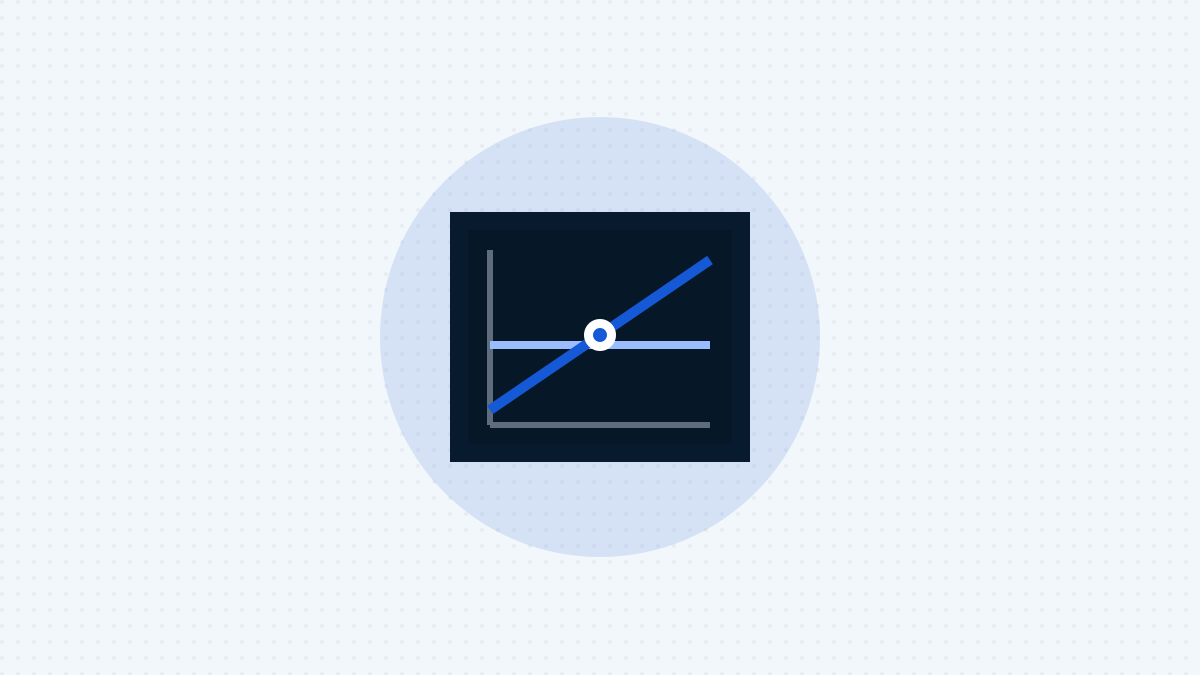
The break-even point is the level of sales at which revenue exactly covers costs, so the business neither makes a profit nor a loss. Below it, the company loses money. Above it, each additional sale adds to profit.
The SBA gives the formula in units:
Break-even point (units) = fixed costs ÷ (price − variable cost per unit)
The difference between price and variable cost is the contribution margin per unit: the amount each sale contributes toward covering fixed costs. The SBA also gives a version in sales dollars, which divides fixed costs by the contribution margin expressed as a share of the sale price.
The SBA adds two practical notes. First, for businesses selling several products, add up the monthly totals, or run the calculation for each product separately if sales swing widely. Second, it suggests adding roughly 10% to the analysis to cover miscellaneous expenses that cannot be predicted. It also stresses that the result is a planning estimate, not a substitute for accounting once costs are actually incurred.
A worked example for a subscription startup
The numbers below are illustrative arithmetic, not data from any real company.
Imagine a small software startup that charges $49 per customer per month. Assumed costs:
| Item | Amount |
|---|---|
| Fixed costs (salaries, tools, insurance, accounting) | $20,000 per month |
| Padding for unpredictable costs (10% of fixed) | $2,000 per month |
| Variable cost per customer (hosting, payment fees, support) | $9 per month |
| One-time launch costs (legal setup, brand, initial build) | $60,000 |
Step 1: contribution margin per customer. $49 − $9 = $40.
Step 2: break-even customers. Fixed costs with padding are $22,000. Dividing $22,000 by $40 gives 550 customers. Without the padding, $20,000 ÷ $40 gives 500, so the cushion adds 50 customers to the target.
Step 3: break-even revenue. 550 customers × $49 = $26,950 per month. As a check, the contribution margin as a share of price is $40 ÷ $49, about 81.6%, and $22,000 ÷ 0.816 is roughly $26,950.
Step 4: the cash needed to get there. Suppose the company adds 50 net new customers each month starting from zero, reaching 550 in month 11. In month k, the monthly shortfall is $22,000 minus $40 times the customers on hand. Summed across the first 11 months, losses total $242,000 − ($2,000 × 66) = $110,000. Adding the $60,000 of one-time costs, the plan needs about $170,000 before the monthly figures turn positive.
That final number is why the exercise matters. A founder who only sees “550 customers” may underestimate the cash needed to survive the climb. Customer growth is rarely this smooth, either.
Why does churn change the answer?
The example assumes every customer who signs up stays. In practice some leave, and every cancellation pushes the break-even date further out. If the company loses customers each month, it must add more than 50 to make net progress. Readers who want to see how this works can read SaaS churn explained, and then test the model with a few different assumptions about how many customers leave.
A useful habit is to run three versions: a cautious case, an expected case and an optimistic case. If the business only works in the optimistic version, that is worth knowing before spending savings or taking on investors.
Where do the numbers go next?
A cost estimate is not an end in itself. It feeds directly into several other decisions.
- Scope. If the launch budget is too large, a smaller first version may be the answer. The guide to how to build a minimum viable product covers how to test an idea at lower cost.
- Funding. The size and timing of the gap determine whether a founder needs outside money at all, and what kind. The overview of startup funding stages explains how rounds are typically matched to milestones.
- Cash management. Break-even is a measure of profit, but a company can be profitable on paper and still run short of cash. The explainer on cash flow versus profit shows why both views are needed.
Investors and lenders generally want to see this reasoning. According to the SBA, they compare expected costs with projected revenue, so a clear break-even model is a basic part of a credible plan.
Common mistakes in early cost estimates
- Forgetting the founders’ pay. If salaries are left out because the founders work for free, the model will look healthier than the business really is.
- Treating one-time costs as the whole story. Launch costs are visible. Monthly costs repeat for years.
- Mixing up fixed and variable costs. A cost that scales with customers belongs in the margin, not in the fixed pool.
- Skipping the cushion. The SBA’s roughly 10% allowance is modest, and many founders choose to add more.
- Never revisiting the model. Prices, costs and customer behavior change, so the estimate should be updated as real figures arrive.
Turning an estimate into a decision
A good startup budget does three things: it lists costs honestly, separates one-time from recurring spending, and shows how many customers the business needs before it pays for itself. The SBA’s method is simple on purpose, which makes it easy to repeat as real data replaces assumptions. Founders who revisit the model every few months tend to spot problems early, while there is still time to adjust price, cut costs or change plans.
This article is general information about business planning. It is not financial, investment, tax or legal advice.
Sources: U.S. Small Business Administration